Turin, Italy
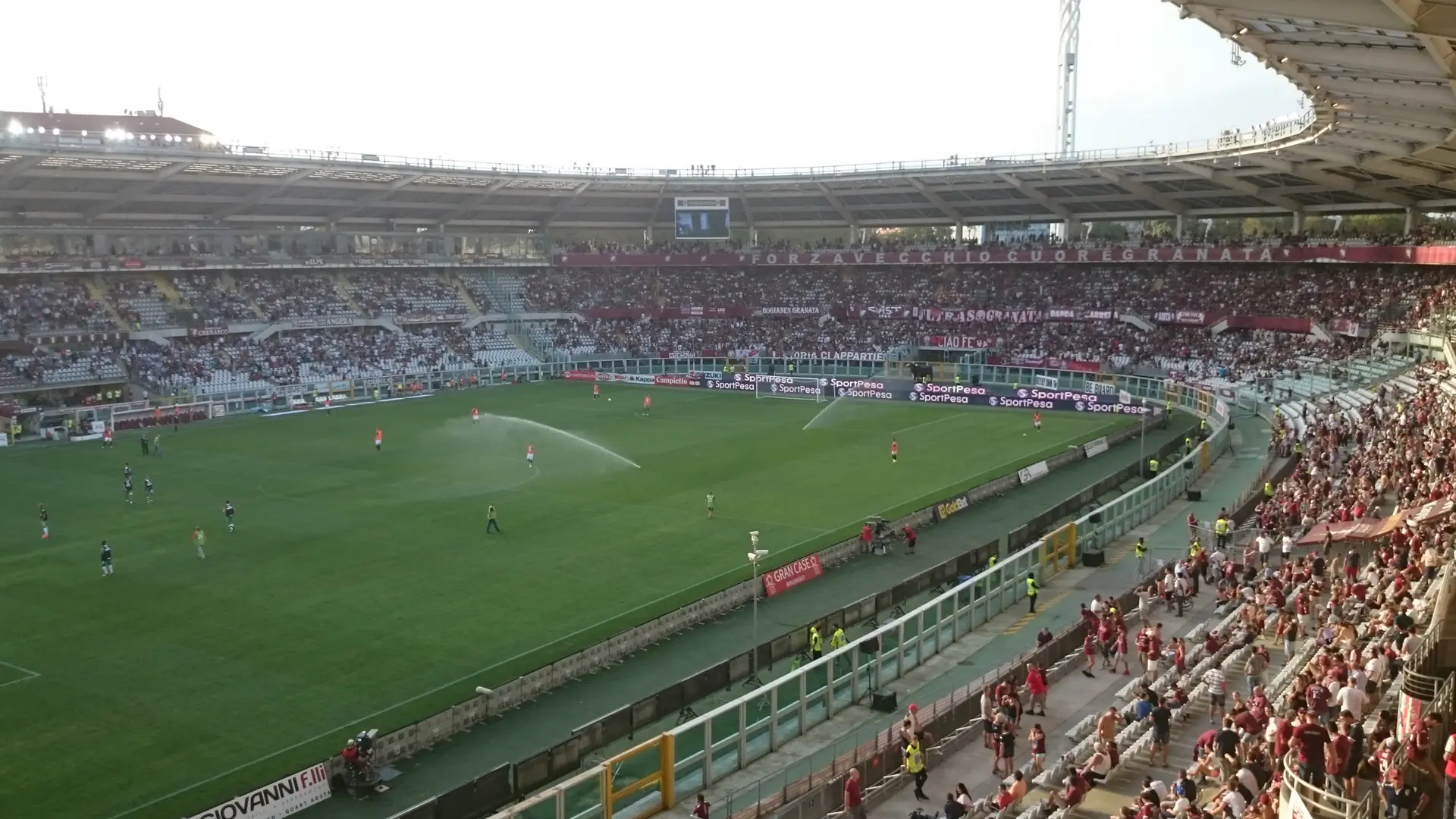
Stadio Olimpico Grande Torino
Turin, Italy
Overview
Stadio Olimpico Grande Torino, in the Santa Rita district about 4 km south of Turin's city centre, is one of Italy's most architecturally rich grounds and the home of Torino FC. Originally opened in 1933 and renamed in April 2016 in honour of the Grande Torino team — the dominant 1940s Torino side wiped out in the Superga air disaster of 4 May 1949 — the ground holds 28,177 and combines fascist-era classicism with a complete 2006 reconstruction for the Turin Winter Olympics. The stadium hosted both Torino and Juventus for most of its history before both clubs moved to Stadio delle Alpi in 1990; Juventus returned briefly between 2006 and 2011 while their own new ground was being built next door, and since then Torino has been the sole tenant.
The Toro fans' relationship with the stadium is unique in Italian football. Each year, the entire club, current squad and tens of thousands of supporters make a pilgrimage to the Basilica di Superga above Turin to mark the 4 May 1949 disaster — the moment when the entire Grande Torino squad died on a return flight from Lisbon. The stadium's renaming in 2016 formalised what had always been emotional truth: this is Torino's house, not just a multi-use municipal arena. The current ground hosted Juventus's 2009-2011 Champions League campaigns and is a regular Italy national team venue. The Derby della Mole against Juventus, played at the Allianz Stadium when Juve are home and here when Toro are, is one of football's oldest urban rivalries — first contested in 1907.
Key Features
- ✓Renamed in April 2016 in honour of Grande Torino, the 1940s team wiped out in the 1949 Superga air disaster
- ✓Capacity 28,177 — home of Torino FC since 2006 reopening; previously shared with Juventus
- ✓Reconstructed for the 2006 Turin Winter Olympics — modern interior within fascist-era 1933 shell
- ✓Hosted Juventus during the 2006-2011 transition between Stadio delle Alpi and Juventus Stadium
- ✓Regular venue of the Derby della Mole vs Juventus — football's oldest derby alongside Glasgow's Old Firm
History
The stadium opened on 14 May 1933 as the Stadio Municipale Benito Mussolini — a muscular fascist-era construction designed by Raffaello Fagnoni, Enrico Bianchini and Dagoberto Ortensi. It immediately became the shared home of Turin's two clubs, Torino and Juventus, and would remain so for the next 57 years. The ground hosted matches at the 1934 FIFA World Cup.
The Grande Torino Era
In the late 1940s, the Stadio Municipale became the home of one of football's most dominant teams. Grande Torino — under coach Ernő Egri Erbstein — won five consecutive Serie A titles (1942/43, 1945/46, 1946/47, 1947/48, 1948/49) and supplied ten players to the Italy national team. On 4 May 1949, returning from a friendly against Benfica in Lisbon, the team's aircraft crashed into the Basilica di Superga on the hill above Turin. The entire squad of 18 players died — football's most devastating single-team tragedy. Torino's last title-winning season was completed posthumously by the youth team. The stadium's eventual 2016 renaming honoured them; the annual Superga pilgrimage every 4 May remains a deeply emotional Turin tradition.
Renamings and the Delle Alpi Years
In 1945, the stadium was renamed Stadio Comunale as part of post-war de-fascistisation, and in 1958 Stadio Comunale Vittorio Pozzo after the legendary Italy manager. For the 1990 FIFA World Cup, Turin committed to building the new Stadio delle Alpi in a different part of the city — and both Torino and Juventus moved there in 1990. The Stadio Comunale was abandoned for 15 years and partially derelict.
The 2006 Winter Olympics Reconstruction
With Turin awarded the 2006 Winter Olympics, the old ground was completely reconstructed as the Stadio Olimpico — opening ceremony venue, then a football stadium afterwards. The all-new interior (modern stands, hospitality, modern seating bowl) sits inside the original 1933 fascist-era shell. After 2006, Torino FC moved back to the renovated Olimpico — but so did Juventus, who needed a home while their Allianz Stadium was being built on the Stadio delle Alpi site. Juventus played all home games here 2006-2011, including the 2008/09 and 2009/10 Champions League campaigns. When Juventus moved to their new ground in September 2011, the Olimpico became Torino's again.
The 2016 Rename and Modern Era
In April 2016, after years of campaigning by Torino supporters, the City of Turin formally renamed the ground Stadio Olimpico Grande Torino. The renaming gave the venue an identity tied unequivocally to Torino's heritage rather than to its shared multi-club past. UEFA Category 4 stadium status was confirmed, and the ground is a regular Italy national team venue.
Tickets & Tours
How to Get Torino FC Tickets
There are three main ways to attend a match at the Olimpico Grande Torino:
1. Official Club Tickets (Best Value)
Buy directly from torinofc.it — general sale typically opens 2-3 weeks before kickoff. Prices range from €20 (Curva upper corners) to €130+ (Tribuna Granata premium). Italian rules require nominative tickets with a matching photo ID. The 'Cuore Toro' membership unlocks earlier sales windows.
⚠️ Important: The Derby della Mole against Juventus, plus visits from Inter, Milan, Napoli and Roma sell out before general sale.
2. Official Hospitality (Guaranteed Access)
Torino FC hospitality at the Olimpico Grande Torino includes:
- Tribuna VIP — central premium with pre/post-match Piedmontese dining, from €150
- Sky Box — private suite for groups, from €350+ per person
- Premium Granata — central lower-tier with hospitality lounge access, from €180
Book via the Torino hospitality desk through the official portal.
3. Third-Party Platforms (Sold-Out Matches)
For sold-out fixtures, established platforms aggregate verified resale:
- LiveFootballTickets — Serie A specialists, from €50
- SeatPick — comparison platform
⚠️ Note: Italian nominative-ticket rules mean some resale tickets cannot be legally transferred. Verify the seller can re-issue in your name.
Stadio Olimpico Grande Torino Tour
Torino FC offers occasional stadium tours, particularly around major derbies and the Museo del Grande Torino e della Leggenda Granata (the dedicated Torino museum at the Basilica di Superga site).
What You'll See
- Grande Torino exhibits including the 1949 Superga story, the 1942-49 Scudetti, and the rebuilt-from-youth-team final 1949 title
- Home dressing room and tunnel
- Pitch-side and dugout access — the modern interior contrasts beautifully with the 1933 shell visible above
- Tribuna Granata hospitality lounges
- Architectural exhibits on the original 1933 design, the 2006 reconstruction, and the fascist-era shell
- The connected Museo del Grande Torino at Superga is a separate but related visit — funicular up the hill from central Turin
Practical Details
- Duration: Approximately 60-75 minutes (stadium); allow longer for combined Superga museum visit
- Schedule: Limited availability; typically Saturdays
- Price: Adults around €15-20
- Languages: Italian, English
- Accessibility: Excellent following the 2006 reconstruction
Booking
- GetYourGuide
- Viator
- Direct: torinofc.it
Pro tip: If you're visiting Turin for football, the Basilica di Superga + Museo del Grande Torino half-day combination — funicular up the hill, basilica visit, the air disaster memorial site — is among Italian football's most powerful experiences.
Quick Tips
- Bring photo ID: Tickets are nominative
- Derby della Mole: Tickets sell out instantly to members
- Superga pilgrimage: Every 4 May the whole club and thousands of fans visit the basilica — one of football's most moving annual rituals
- Combine with Allianz Stadium: Both Turin grounds are within easy reach for a football tourism weekend
Best Seats at Stadio Olimpico Grande Torino
The ground is a modern bowl wrapped inside a 1933 shell, with the Curva Maratona (north end, home of the Toro ultras), the Curva Filadelfia (south end), the Tribuna Granata (long side west) and the Distinti (long side east). Central sections of the Tribuna Granata offer the best balance.
Curva Maratona (North End)
Historic home of the Torino ultras — the Curva Maratona group has been the loudest in Turin since the 1970s, named after the 1933 Marathon Tower that crowns this end. Prices typically €20-40 for Serie A. Atmosphere is exceptional; Torino's small but devoted fanbase concentrates in the Curva Maratona's vertical stands.
Curva Filadelfia (South End)
The opposite curve, named after Torino's historic former training ground in the Filadelfia district. Traditionally allocated to away teams and additional Torino supporters. Prices €20-35. The away allocation typically sits in the upper section.
Tribuna Granata (Long Side, West)
The Tribuna Granata runs along the west long side with the dressing room tunnel below. 'Granata' is Torino's traditional colour (claret). Sections include Tribuna Granata Centrale (premium central) and Tribuna Granata Laterale (wings). Pricing €50-100 (Lower Tier central), €40-80 (Upper Tier), with central sections most expensive. The Tribuna Granata is the focal point of TV cameras and offers the best architectural views.
Distinti (Long Side, East)
The Distinti is the opposite long side. Sections Distinti Centrale and Distinti Laterale. Pricing €40-80. Slightly more affordable than the Tribuna Granata.
Premium & Hospitality
Torino offers hospitality in the Tribuna VIP and Sky Box sections. Packages start around €150 and exceed €350 for visits from Inter, Milan, Napoli and the Derby della Mole against Juventus. Book via Torino FC's hospitality desk.
Accessibility
Wheelchair-accessible seating with companion seats following the 2006 reconstruction. Lift access between levels, accessible toilets and dedicated entrances. Contact Torino FC accessibility in advance.
Pro Tips
- Best atmosphere: Curva Maratona lower — concentrated, loud Toro support
- Best balance: Tribuna Granata central, Lower Tier
- Best photographs: Distinti upper, looking back toward the Maratona's tower and the architectural shell of the original 1933 stadium
- Away fans: Curva Filadelfia upper section
- Derby della Mole: Tickets sell out instantly to members; hospitality is the realistic route
- 4 May matches: If a home match falls near the Superga anniversary, the curva tifo is extraordinary
Match Day Experience
A matchday at the Olimpico Grande Torino is one of European football's most emotionally weighted experiences — a club whose identity is shaped by tragedy and loyalty, with the Basilica di Superga visible from the upper stands on the hill above Turin.
Pre-Match (2-3 hours before)
The matchday gathers around the Santa Rita district just outside the stadium and the broader Turin city centre. Bars and trattorias along Via Tirreno, Via Tripoli and the Piazza Marmolada fill with granata-clad supporters. Try Trattoria Valentino for Piedmontese cuisine, Bar Toro for matchday aperitivo, or any of the small kiosks selling panini con salsiccia and bicchieri di Barbera (glasses of red wine — Piedmontese tradition). Many fans travel to the Basilica di Superga before big matches — particularly on or near 4 May — for the annual remembrance of the 1949 air disaster.
Inside the Stadium
Gates open roughly 90 minutes before kickoff. The first sight from the upper Tribuna is striking — the modern interior wrapped inside the 1933 fascist-era walls, the Marathon Tower visible at the north end, the Basilica di Superga on its hill in the distance. Pre-match anthems include the iconic 'Toro Toro' chant, 'Cuore Granata' (Granata Heart) by the Torino faithful, and on Superga anniversary matches the entire stadium falls silent before the kick-off whistle. The Curva Maratona leads relentless singing throughout — Toro support is smaller in number than Juve's but the intensity is among Italian football's deepest.
Food & Drink
Concession kiosks sell Piedmontese matchday fare — panini con salsiccia, piadine, bagna cauda in winter, plus Peroni, Birra Moretti and local Birra Menabrea. Prices reasonable (around €5-7). Hospitality areas offer Piedmontese tasting menus with Barbera and Nebbiolo wines.
After the Match
Post-match crowds funnel toward Lingotto metro station (a 10-minute walk) and the bus interchange. Allow 15-20 minutes for crowds to clear. The city centre stays lively until late — San Salvario (just north of the stadium) is excellent for post-match aperitivo and dinner, with the area around Piazza Madama Cristina hosting some of Turin's best trattorias.
International Visitor Tips: Italian rules require nominative tickets matched to a photo ID. Combine the matchday with the Basilica di Superga funicular ride (the 1949 air disaster site, with stunning views of Turin and the Alps), the Museo Egizio (the second-largest Egyptian museum in the world), and Turin's famous chocolate and aperitivo culture. The Olimpico Grande Torino is just 4 km from central Turin — easy to combine with the city's wider cultural offering, including the Allianz Stadium on the same trip (8 km north-west).
Bag Policy & Prohibited Items
⚠️ Important: Torino's regulations ban a set of items most visitors would never think to leave behind.
Binoculars and telescopes are refused, as are reflex cameras and camcorders — a real consideration at a ground this size, where a long lens is tempting. Also banned: drones of any size, laser pointers, belts with large metal buckles, and motorcycle helmets.
Umbrellas are permitted only if small, without sharp points, and judged harmless by security staff.
No bag dimension is published, so a small bag searched by pat-down at the gate is the working limit, and there is no deposit. Do not carry an assumption over from the Allianz Stadium on the other side of Turin: that ground provides lockers for anything oversized, and this one does not.
Bring photo ID, checked against your ticket. Where police restrict sales for a particular fixture, entry can be limited to Fidelity Card holders, so check the conditions attached to the match before you buy.
Getting There
🚇 Metro
Metro Line 1 to Lingotto is the closest metro stop — about a 10-minute walk from the stadium. From Turin centre (Porta Nuova or Porta Susa), the journey is 10-15 minutes. The metro runs every 4-6 minutes on matchdays.
🚌 Bus
GTT bus lines 4, 14, 17, 35 and 62 serve the Santa Rita district and Piazzale Grande Torino. From Porta Nuova, journey time is 15-25 minutes depending on traffic. GTT runs extra services on matchdays.
🅿️ Parking
Limited parking on matchdays — surrounding streets operate residents-only schemes. The largest options are Parcheggio Lingotto (€2-3/hour) and parking around Esposizione Torino. Most fans use the metro from Lingotto or walk from central Turin.
🚶 From City Center
The stadium is ~4 km south of central Turin (Piazza Castello) — a 40-50 minute walk through Porta Nuova and San Salvario. A taxi from the centre costs around €10-15. Uber Black and FreeNow operate in Turin.
Where to Stay for Stadio Olimpico Grande Torino
Near the Stadium (Santa Rita / Lingotto)
Search hotels near the Olimpico
The Santa Rita and Lingotto districts are quieter than central Turin but offer practical access to the stadium and Lingotto metro.
NH Torino Lingotto (1.5 km)
Four-star within the historic Fiat Lingotto building, with the famous rooftop track once used by Fiat for car testing. Walking distance to the stadium and excellent transport links. A distinctive base for a match-focused weekend.
Turin Centre (Recommended)
Search hotels in central Turin
For most visitors, central Turin around Piazza Castello, Quadrilatero Romano or Porta Nuova is the better choice — walking distance to the Mole Antonelliana, the Museo Egizio, the Palazzo Reale and Turin's renowned chocolate-and-aperitivo culture, with a 15-minute metro ride to the stadium.
Turin Palace Hotel (Porta Nuova, 3 km)
Five-star luxury opposite the main railway station — convenient for both the stadium (metro Line 1 to Lingotto, then 10-minute walk) and onward travel. Excellent service, classic Turin grand-hotel ambience.
NH Collection Torino Piazza Carlina (centre, 3.5 km)
Four-star in a 17th-century palazzo on Piazza Carlo Emanuele II. Excellent location for Turin's restaurants and the Egyptian Museum. Strong service and modern rooms.
Tomato Backpackers Hotel (centre, 4 km)
Budget pick for younger visitors and groups. Hostel and private room options near Porta Nuova.
Our Recommendation
For most visitors, stay in central Turin — the city's chocolate, aperitivo and museum culture is excellent and the metro to Lingotto removes most of the friction of getting to the stadium. The Lingotto-area hotels make sense only for purely match-focused trips. If you're combining the Olimpico Grande Torino with a Juventus trip on the same weekend, Porta Nuova is the ideal base — direct shuttle to Allianz Stadium and metro to the Olimpico.
Frequently Asked Questions
The stadium was renamed Stadio Olimpico Grande Torino in April 2016 in honour of the Grande Torino — the dominant 1940s Torino squad wiped out in the Superga air disaster of 4 May 1949, when their aircraft crashed into the Basilica di Superga returning from a friendly in Lisbon. The entire team of 18 players died. The renaming formalised the deep emotional connection between Torino FC and the stadium.
Torino tickets at the Olimpico Grande Torino typically range from €20 (Curva upper corners) to €130+ (Tribuna Granata premium). The Derby della Mole against Juventus and visits from Inter, Milan, Napoli or Roma are heavily oversubscribed and often only available via hospitality (from ~€150) or the secondary market. Stadium tours are €15-20.
Buy directly from torinofc.it/en/tickets. Italian rules require nominative tickets matched to a photo ID, so the secondary market is risky unless the seller can legally re-issue in your name. The 'Cuore Toro' membership unlocks earlier sales windows.
Yes — Juventus played at the Stadio Olimpico (then called simply Stadio Olimpico) between 2006 and 2011 while their own new stadium was being built on the demolished Stadio delle Alpi site. Juve's home matches in the 2008/09 and 2009/10 Champions League campaigns were played here. When Juventus Stadium (now Allianz Stadium) opened in September 2011, Juventus moved out and Torino became the sole tenant.
Yes, Torino FC offers occasional stadium tours including the dressing rooms, pitch-side and the architectural contrast between the 1933 fascist-era shell and the 2006 modern interior. Adults around €15-20, 60-75 minutes. Combine with the Basilica di Superga and the dedicated Museo del Grande Torino at the air disaster memorial site for a half-day Torino experience.
Only a small bag, searched by pat-down; no dimension is published and there is no deposit. Torino also refuse binoculars, telescopes, reflex cameras and camcorders, drones and belts with large metal buckles, and allow umbrellas only if small and blunt. Unlike the Allianz Stadium across the city, there are no lockers here.
Metro Line 1 to Lingotto (10-minute walk to the stadium) is the fastest option — 10-15 minutes from Porta Nuova or Porta Susa. GTT bus lines 4, 14, 17, 35 and 62 also serve the Santa Rita district. Walking from central Turin takes 40-50 minutes through pleasant streets. Taxis cost €10-15.
The Stadio Olimpico Grande Torino has a capacity of 28,177. The current configuration dates from the 2006 Winter Olympics reconstruction, which built an entirely new interior bowl within the original 1933 fascist-era architectural shell.
Details on this page can change without much notice, and cup or European fixtures often run different rules. Last reviewed 10 August 2026 — worth confirming anything important with the club before you travel.
Related Stadiums
Other stadiums in Serie A
Tickets & Tours
Stadium Name History
Visit www.stadiumseeker.com for tickets, tours, and interactive maps